Define a stack of impulse models. More...
#include <multiple-impulses.hpp>
Public Types | |
| typedef pinocchio::container::aligned_vector< pinocchio::ForceTpl< Scalar > >::iterator | ForceIterator |
| typedef ImpulseDataAbstractTpl< Scalar > | ImpulseDataAbstract |
| typedef std::map< std::string, std::shared_ptr< ImpulseDataAbstract > > | ImpulseDataContainer |
| typedef ImpulseDataMultipleTpl< Scalar > | ImpulseDataMultiple |
| typedef ImpulseItemTpl< Scalar > | ImpulseItem |
| typedef ImpulseModelAbstractTpl< Scalar > | ImpulseModelAbstract |
| typedef std::map< std::string, std::shared_ptr< ImpulseItem > > | ImpulseModelContainer |
| typedef MathBaseTpl< Scalar > | MathBase |
| typedef MathBase::MatrixXs | MatrixXs |
| typedef StateMultibodyTpl< Scalar > | StateMultibody |
| typedef MathBase::Vector2s | Vector2s |
| typedef MathBase::Vector3s | Vector3s |
| typedef MathBase::VectorXs | VectorXs |
Public Member Functions | |
| ImpulseModelMultipleTpl (std::shared_ptr< StateMultibody > state) | |
| Initialize the multi-impulse model. | |
| void | addImpulse (const std::string &name, std::shared_ptr< ImpulseModelAbstract > impulse, const bool active=true) |
| Add impulse item. | |
| void | calc (const std::shared_ptr< ImpulseDataMultiple > &data, const Eigen::Ref< const VectorXs > &x) |
| Compute the total impulse Jacobian and impulse velocity. | |
| void | calcDiff (const std::shared_ptr< ImpulseDataMultiple > &data, const Eigen::Ref< const VectorXs > &x) |
| Compute the derivatives of the impulse holonomic constraint. | |
| template<typename NewScalar> | |
| ImpulseModelMultipleTpl< NewScalar > | cast () const |
| Cast the multi-impulse model to a different scalar type. | |
| void | changeImpulseStatus (const std::string &name, const bool active) |
| Change the impulse status. | |
| std::shared_ptr< ImpulseDataMultiple > | createData (pinocchio::DataTpl< Scalar > *const data) |
| Create the multi-impulse data. | |
| const std::set< std::string > & | get_active_set () const |
| Return the names of the set of active impulses. | |
| const ImpulseModelContainer & | get_impulses () const |
| Return the impulse models. | |
| const std::set< std::string > & | get_inactive_set () const |
| Return the names of the set of inactive impulses. | |
| std::size_t | get_nc () const |
| Return the dimension of active impulses. | |
| std::size_t | get_nc_total () const |
| Return the dimension of all impulses. | |
| const std::shared_ptr< StateMultibody > & | get_state () const |
| Return the multibody state. | |
| bool | getImpulseStatus (const std::string &name) const |
| Return the status of a given impulse name. | |
| void | removeImpulse (const std::string &name) |
| Remove impulse item. | |
| void | updateForce (const std::shared_ptr< ImpulseDataMultiple > &data, const VectorXs &impulse) |
| Update the spatial impulse defined in frame coordinate. | |
| void | updateForceDiff (const std::shared_ptr< ImpulseDataMultiple > &data, const MatrixXs &df_dx) const |
| Update the Jacobian of the spatial impulse defined in frame coordinate. | |
| void | updateRneaDiff (const std::shared_ptr< ImpulseDataMultiple > &data, pinocchio::DataTpl< Scalar > &pinocchio) const |
| Update the RNEA derivatives dtau_dq by adding the skew term (necessary for impulses expressed in LOCAL_WORLD_ALIGNED / WORLD). | |
| void | updateVelocity (const std::shared_ptr< ImpulseDataMultiple > &data, const VectorXs &vnext) const |
| Update the system velocity after impulse. | |
| void | updateVelocityDiff (const std::shared_ptr< ImpulseDataMultiple > &data, const MatrixXs &dvnext_dx) const |
| Update the Jacobian of the system velocity after impulse. | |
Public Attributes | |
| EIGEN_MAKE_ALIGNED_OPERATOR_NEW typedef _Scalar | Scalar |
Friends | |
| template<class Scalar> | |
| std::ostream & | operator<< (std::ostream &os, const ImpulseModelMultipleTpl< Scalar > &model) |
| Print information on the impulse models. | |
Detailed Description
class crocoddyl::ImpulseModelMultipleTpl< _Scalar >
Define a stack of impulse models.
The impulse models can be defined with active and inactive status. The idea behind this design choice is to be able to create a mechanism that allocates the entire data needed for the computations. Then, there are designed routines that update the only active impulse.
Definition at line 61 of file multiple-impulses.hpp.
Member Typedef Documentation
◆ MathBase
| typedef MathBaseTpl<Scalar> MathBase |
Definition at line 66 of file multiple-impulses.hpp.
◆ StateMultibody
| typedef StateMultibodyTpl<Scalar> StateMultibody |
Definition at line 67 of file multiple-impulses.hpp.
◆ ImpulseDataAbstract
| typedef ImpulseDataAbstractTpl<Scalar> ImpulseDataAbstract |
Definition at line 68 of file multiple-impulses.hpp.
◆ ImpulseDataMultiple
| typedef ImpulseDataMultipleTpl<Scalar> ImpulseDataMultiple |
Definition at line 69 of file multiple-impulses.hpp.
◆ ImpulseModelAbstract
| typedef ImpulseModelAbstractTpl<Scalar> ImpulseModelAbstract |
Definition at line 70 of file multiple-impulses.hpp.
◆ ImpulseItem
| typedef ImpulseItemTpl<Scalar> ImpulseItem |
Definition at line 72 of file multiple-impulses.hpp.
◆ Vector2s
| typedef MathBase::Vector2s Vector2s |
Definition at line 74 of file multiple-impulses.hpp.
◆ Vector3s
| typedef MathBase::Vector3s Vector3s |
Definition at line 75 of file multiple-impulses.hpp.
◆ VectorXs
| typedef MathBase::VectorXs VectorXs |
Definition at line 76 of file multiple-impulses.hpp.
◆ MatrixXs
| typedef MathBase::MatrixXs MatrixXs |
Definition at line 77 of file multiple-impulses.hpp.
◆ ImpulseModelContainer
| typedef std::map<std::string, std::shared_ptr<ImpulseItem> > ImpulseModelContainer |
Definition at line 80 of file multiple-impulses.hpp.
◆ ImpulseDataContainer
| typedef std::map<std::string, std::shared_ptr<ImpulseDataAbstract> > ImpulseDataContainer |
Definition at line 82 of file multiple-impulses.hpp.
◆ ForceIterator
| typedef pinocchio::container::aligned_vector<pinocchio::ForceTpl<Scalar>>::iterator ForceIterator |
Definition at line 84 of file multiple-impulses.hpp.
Constructor & Destructor Documentation
◆ ImpulseModelMultipleTpl()
| explicit |
Initialize the multi-impulse model.
- Parameters
[in] state Multibody state
Member Function Documentation
◆ addImpulse()
| void addImpulse | ( | const std::string & | name, |
| std::shared_ptr< ImpulseModelAbstract > | impulse, | ||
| const bool | active = true ) |
Add impulse item.
Note that the memory is allocated for inactive impulses as well.
- Parameters
[in] name Impulse name [in] impulse Impulse model [in] active Impulse status (active by default)
◆ removeImpulse()
| void removeImpulse | ( | const std::string & | name | ) |
Remove impulse item.
- Parameters
[in] name Impulse name
◆ changeImpulseStatus()
| void changeImpulseStatus | ( | const std::string & | name, |
| const bool | active ) |
Change the impulse status.
- Parameters
[in] name Impulse name [in] active Impulse status (True for active)
◆ calc()
| void calc | ( | const std::shared_ptr< ImpulseDataMultiple > & | data, |
| const Eigen::Ref< const VectorXs > & | x ) |
Compute the total impulse Jacobian and impulse velocity.
- Parameters
[in] data Multi-impulse data [in] x State point 

◆ calcDiff()
| void calcDiff | ( | const std::shared_ptr< ImpulseDataMultiple > & | data, |
| const Eigen::Ref< const VectorXs > & | x ) |
Compute the derivatives of the impulse holonomic constraint.
- Parameters
[in] data Multi-impulse data [in] x State point
◆ updateVelocity()
| void updateVelocity | ( | const std::shared_ptr< ImpulseDataMultiple > & | data, |
| const VectorXs & | vnext ) const |
Update the system velocity after impulse.
- Parameters
[in] data Multi-impulse data [in] vnext System velocity after impulse 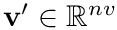

◆ updateForce()
| void updateForce | ( | const std::shared_ptr< ImpulseDataMultiple > & | data, |
| const VectorXs & | impulse ) |
Update the spatial impulse defined in frame coordinate.
- Parameters
[in] data Multi-impulse data [in] impulse Spatial impulse defined in frame coordinate 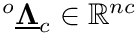

◆ updateVelocityDiff()
| void updateVelocityDiff | ( | const std::shared_ptr< ImpulseDataMultiple > & | data, |
| const MatrixXs & | dvnext_dx ) const |
Update the Jacobian of the system velocity after impulse.
- Parameters
[in] data Multi-impulse data [in] dvnext_dx Jacobian of the system velocity after impact in generalized coordinates 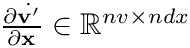

◆ updateForceDiff()
| void updateForceDiff | ( | const std::shared_ptr< ImpulseDataMultiple > & | data, |
| const MatrixXs & | df_dx ) const |
Update the Jacobian of the spatial impulse defined in frame coordinate.
- Parameters
[in] data Multi-contact data [in] df_dx Jacobian of the spatial impulse defined in frame coordinate 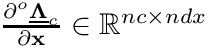

◆ updateRneaDiff()
| void updateRneaDiff | ( | const std::shared_ptr< ImpulseDataMultiple > & | data, |
| pinocchio::DataTpl< Scalar > & | pinocchio ) const |
Update the RNEA derivatives dtau_dq by adding the skew term (necessary for impulses expressed in LOCAL_WORLD_ALIGNED / WORLD).
as explained in this document : https://www.overleaf.com/read/tzvrrxxtntwk
- Parameters
[in] data Multi-contact data [in] pinocchio Pinocchio data
◆ createData()
| std::shared_ptr< ImpulseDataMultiple > createData | ( | pinocchio::DataTpl< Scalar > *const | data | ) |
Create the multi-impulse data.
- Parameters
[in] data Pinocchio data
- Returns
- the multi-impulse data.
◆ cast()
| ImpulseModelMultipleTpl< NewScalar > cast | ( | ) | const |
Cast the multi-impulse model to a different scalar type.
It is useful for operations requiring different precision or scalar types.
- Template Parameters
NewScalar The new scalar type to cast to.
- Returns
- ImpulseModelMultipleTpl<NewScalar> A multi-impulse model with the new scalar type.
Member Data Documentation
◆ Scalar
| EIGEN_MAKE_ALIGNED_OPERATOR_NEW typedef _Scalar Scalar |
Definition at line 65 of file multiple-impulses.hpp.
The documentation for this class was generated from the following files:
- /build/source/include/crocoddyl/multibody/fwd.hpp
- /build/source/include/crocoddyl/multibody/impulses/multiple-impulses.hpp